A History of Watson's, Rose Lake, and the Silver Valley
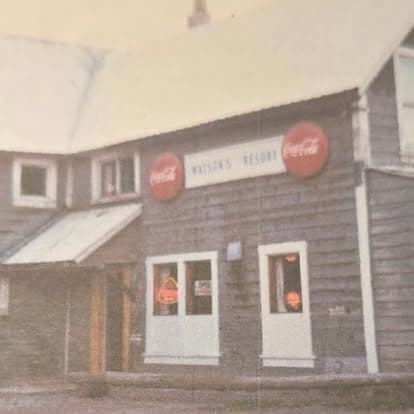
The land Watson's sits on has a layered past — a Coeur d'Alene homeland for thousands of years, a Jesuit mission frontier in the mid-1800s, a Mullan Road waypoint by the 1860s, a railroad junction by the 1890s, and a lumber-company town in the early twentieth century. The lodge tavern at the heart of the property dates to 1906.
Before the Lake Had That Name
Long before any of the place names used today existed, the Coeur d'Alene River corridor was home to the Schitsu'umsh — “The Discovered People,” known today as the Coeur d'Alene Tribe. The chain of lakes along the lower Coeur d'Alene River, of which Rose Lake is one of eleven, supported winter villages and seasonal camps that had been occupied, in the tribe's own framing, since time immemorial. The site of present-day Cataldo was a Coeur d'Alene village known as sq'wt'u.
The land's deepest history belongs to the Coeur d'Alene Tribe, and we acknowledge them as the first and continuing stewards of this place.
The Mission and the Mullan Road
In 1842, the Belgian Jesuit Father Pierre Jean De Smet arrived in the region at the invitation of regional tribes. After an early mission site near the St. Joe River proved prone to flooding, the Jesuits moved to a hill above the Coeur d'Alene River. The Mission of the Sacred Heart was designed by the Italian-born Father Anthony Ravalli and built between 1850 and 1853 by Ravalli, Brother Huybrechts, and Schitsu'umsh laborers, using almost no metal hardware. It is the oldest standing building in Idaho and a National Historic Landmark. It stands roughly seven miles east of Watson's.
Between 1858 and 1862, Lieutenant John Mullan led construction of a 624-mile military road between Fort Benton, Montana and Fort Walla Walla, Washington. The mission served as a base camp and supply station, and the road opened the Coeur d'Alene River valley to Euro-American traffic for the first time. The town that grew up at the river crossing west of the mission was eventually named for Father Joseph Cataldo, a Sicilian-born Jesuit who served there from 1865 to 1870 and later founded Gonzaga University in Spokane.
Rose Lake, 1905
Rose Lake and Rose Creek take their names from Rose Brown, the daughter of a family that homesteaded on nearby Cougar Creek in the late 1800s. The Rose Lake Post Office was established in 1905, marking the formal birth of the town.
What followed was rapid. By 1916, Rose Lake's population had reached 500 — larger than Cataldo had ever been. Its growth was driven entirely by timber. The Rose Lake Lumber Company built a sawmill on the lake at the turn of the century, and the townsite grew up around it: a classic company town with a mill, a green chain for sorting logs, worker housing, and a post office. From 1910 to 1923, the company ran eight miles of its own track and a geared locomotive, hauling logs to the mill. In 1911 the Winton family of Wisconsin and Minnesota lumbermen bought the mill; in 1923 they consolidated their Idaho holdings into the Winton Lumber Company.
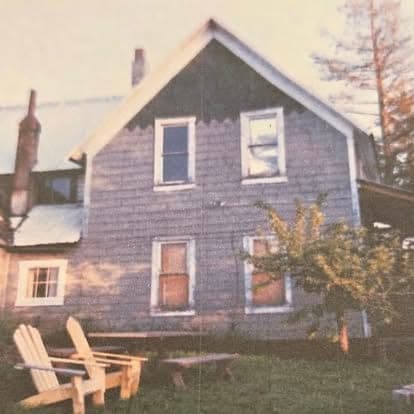
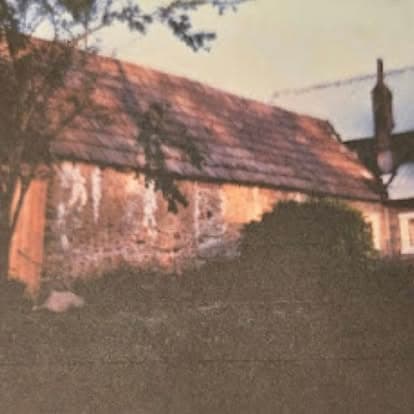
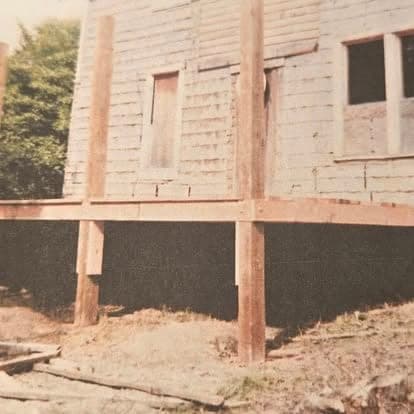
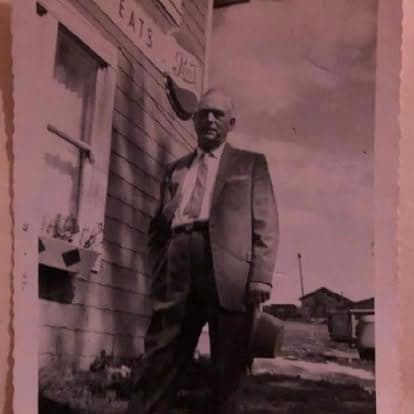
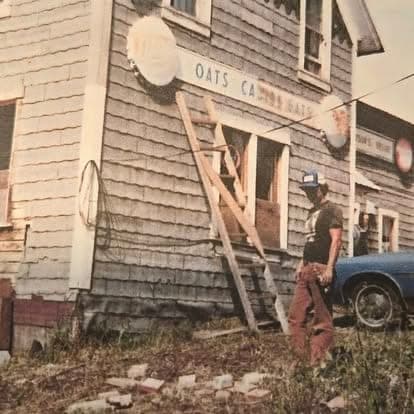
It is in this context, in 1906, at the height of the lumber boom that built the town, that the lodge tavern now operating as Red's Tavern was constructed. Its date places it firmly among the original commercial structures of the company-town era.
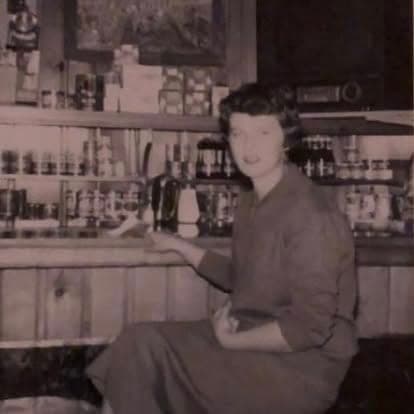
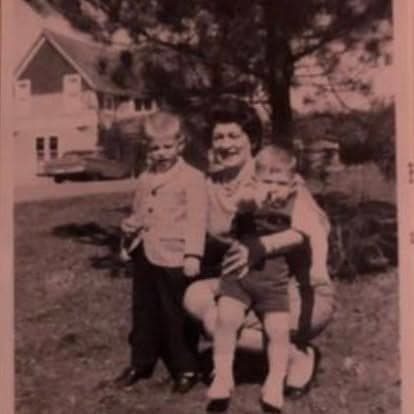
The original chain of title and use for the building between 1906 and the late twentieth century is not well documented in publicly accessible records. We can verify the building dates to 1906; we cannot name its first proprietor or claim continuous operation across the intervening century.
The Quiet Years & the Trail
The lumber boom did not last. The Rose Lake mill ran for roughly twenty years, and by the 1920s the most accessible timber had been cut. The 1910 Big Burn — the largest forest fire in U.S. history — had already disrupted the regional timber economy, and the Depression hit North Idaho lumber hard through the 1930s. The Winton Lumber Company shifted its center of gravity to Coeur d'Alene, the mill closed, and Rose Lake's population dwindled through mid-century.
Through the mid-twentieth century, the lower Coeur d'Alene River corridor settled into a quieter rural pattern. The chain lakes became known for fishing and waterfowl rather than logs. From the Trail of the Coeur d'Alenes today, an attentive eye can still spot concrete foundations in what is now wetland — the remains of the green chain where Rose Lake logs were once sorted.
The single most consequential modern development for the corridor came in the late 1990s and early 2000s, when the former Union Pacific rail line was converted into a paved recreation trail. The Trail of the Coeur d'Alenes runs 73 miles from Mullan to Plummer and passes Watson's front door. For the first time since the lumber era, the rail corridor that built Rose Lake is again bringing travelers through the area — this time on bicycles.
From Watson's Rose Lake Resort to Watson's Lakefront Resort
Public business records show a Watson's Rose Lake Resort operating in Cataldo from 1999. Visitor accounts from the 2000s and 2010s describe a working but rough property: inexpensive cabins, a campground, a bar on the lake, and an apartment above the bar.
The property's transition to Watson's Lakefront Resort under Bill and Louise Rice represents the most significant renovation and rebranding in its recent history. The five-unit glamping mix that exists today — two log cabins, one safari tent, one geodesic dome, and The Tavern Lodge above Red's Tavern — alongside Red's Tavern operating as a garden-to-table restaurant anchored by Louise's on-property garden, is a deliberate move from a rustic, campground-oriented operation toward a destination resort. The current direction preserves the 1906 lodge as the physical center of the property.

What We Can Verify
For accuracy, here are the historical claims on this page that are supported by public records and authoritative sources, and the gaps in the record we have not yet filled:
- The lodge tavern building dates to 1906, at the height of the Rose Lake Lumber Company era.
- Rose Lake was named for Rose Brown, a Cougar Creek homesteader's daughter, and the Rose Lake Post Office was established in 1905.
- Rose Lake was a company town for the Rose Lake Lumber Company, later folded into the Winton Lumber Company.
- The Mission of the Sacred Heart, the oldest standing building in Idaho, sits roughly seven miles east of Watson's and was built between 1850 and 1853.
- The Trail of the Coeur d'Alenes follows a former Union Pacific rail corridor laid during the same era that built the lodge.
The identity of the original 1906 builder, the building's chain of ownership before 1999, and any Watson family genealogical connection to the property name are not established in publicly accessible records.
Sources
Compiled from public sources including the Kootenai County Historic Preservation Plan 2024–2034, the Kootenai County community pages for Rose Lake and Cataldo, the Silver Valley Chamber of Commerce, the Minnesota Historical Society's Winton Lumber Company records, the Coeur d'Alene Press, the University of Idaho Library's White Pine: King of Many Waters collection, the Idaho Architecture Project, Idaho Magazine(“Rose Lake Spotlight,” Mary Terra-Berns, 2018), Visit Idaho, and Spokane Historical.
Stand Where the History Stands
The 1906 lodge is still here. Book a stay, or come for dinner at Red's Tavern in the same building Rose Lake's mill workers and travelers would have known.